Listen to the Spirits

Tags

No tags :(

Share it

by Luisa A. Igloria

Review of Song of the Babaylan: Living Voices, Medicines, Spiritualities of Philippine Ritualist-Oralist Healers, Grace Nono (Institute of Spirituality in Asia, 2013)

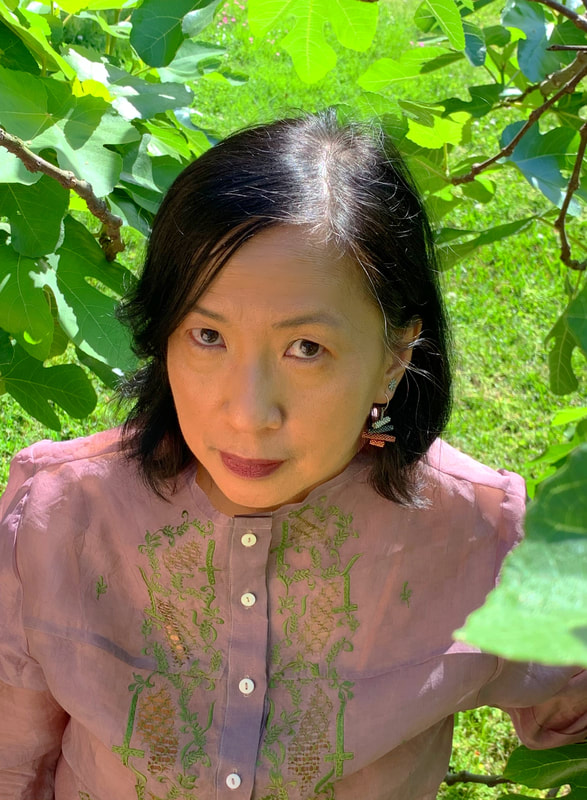
Grace Nono Photo by Neal Oshima; shawl by Narda Capuyan; styling by Zeldy Liquigan.

Grace Nono
Photo by Neal Oshima; shawl by Narda Capuyan; styling by Zeldy Liquigan.


In the “Invocations” chapter of her newest book, Song of the Babaylan: Living Voices, Medicines, Spiritualities of Philippine Ritualist-Oralist Healers (Institute of Spirituality in Asia), singer, scholar, and grassroots cultural worker Grace Nono recollects an episode of illness in childhood. As she lies in an upstairs bedroom of her parents’ home in Bunawan, Agusan del Sur, she hears her father calling her name outside in the yard. She writes, “Several times he called, but not to me; he seemed to be addressing the wide, open night sky.” Later, her father tells her that he was calling to her soul to return to her body and restore her to health. It is quietly striking that this anecdote is found so close to the book’s beginning “Methodology” section— for what it accomplishes in an immediate way is the grounding of the text and its curator within a network of relationships where “research” cannot ever be divorced from lived reality and vice versa, where one’s sense of rational reality cannot ever be divorced from a sense of the unknown, the mystical, from dream or spirit.


I have followed and greatly admired Grace Nono’s career for many years, from the time I met her when she was a college student in one of the English or literature courses I taught as a very young instructor at the University of the Philippines in Baguio. At this time she was also just beginning to hone her voice and craft as a musician in Baguio’s many folk houses. Our lives intertwined in more personal ways in the years after that, and I had the good fortune to work with her on the written aspect of some of her earlier indigenous music revitalization projects. Most perhaps know Grace primarily through her powerful singing voice and her enchanting stage presence. But what is so wonderful about Grace is her absolute commitment, through all that she has done through the years, to the goal of deepening our understanding of our shared indigenous, musical, cultural, and spiritual roots.

In regard to this new work, I purposefully refer to Grace Nono’s curatorial role, not to diminish her solid accomplishments and gifts as a writer, scholar, and thinker—but in order to reiterate her deep understanding of the basic principle of a shared ethos that simultaneously defines an individual and her communities. Song of the Babaylan’s most powerful message is that all of us—acting not as one person alone, not as one government or nation by itself, but rather in conscious recognition of each other— are ultimately responsible for the longevity and survival of human tradition.

Mendung Sabal, South Cotabato

                             Babaylan Mendung Sabal, South Cotabato

The Philippine babaylan, powerful shamanic figures from precolonial times and known by variant names throughout the archipelago (bailan, anitera/o, diwatero/a, catalonan, mambunong) were said to have been banished en masse at the time institutionalized religion was enlisted in the work of colonization. Keepers of ritual, poets, priestesses, healers and repositories of natural and tribal history, they were viewed as threats to the goals of colonial order, and rightly so.

As shamans who were the living embodiment of a world view of interconnectedness, they had access to the ground-level realities of experience, and held the keys to a vast network of alternative communication systems that included dreamwork, herbology, native agriculture and economics, epic poetry, folklore, fable, talinghaga or metaphor, among other things. Doubtless, to the outsider, these community figures were not only mysterious but frightening, and could only be dismissed by their demonization as practitioners of savagery or “paganism”, run out of town, whipped or beaten (like Dapungay in Cebu, Negros and Panay, Caguenga in Cagayan, Yga in Nueva Ecija and Santissima in Iloilo, for daring to lead local rebellions), killed (like Tamblot of Bohol, Sumoroy of Northern Samar, and Tapar of Panay) or jailed (like  Papa Isio of Negros, who died in Bilibid Prison in 1911).

Babaylan? I thought they were all gone, remarked a young student-acquaintance not too long ago, almost in the same way one might talk about an extinct species. They are very much alive, as this book affirms, in words and in recorded song and chants, and in practices whose continuity we need to safeguard.

In this generous work, Grace has gathered the voices of living babaylan. The book’s ten major sections are devoted to  babaylan using their own words to describe their chosen “genre” or main mode of work to channel the spirits for ritual, healing, pedagogical or other purposes: Aragoy and Gannay through Dawak, Babo Samida and Ama Maugan through Daging, Ka Mila through Subli, Undin through Tod-om/Gudgod chants, Nong Cabeza through Dalit, Josefa/Manang Lita through Mangurug, Minan Nenita through Turon, Mang Henio through Angba/Ba-diw, Mendung through Lingon Loos, and Inday Titang through Sinuog.

In these chapters, what emerges most clearly in my reading is not a picture of babaylan as passive or empty mediums through which an external or transcendent substance or knowledge is simply sieved and absorbed. Rather, I am struck by how the babaylan are very physical and human examples of what it is like to be intensely open to the encounter with both benevolent and potentially malevolent influences, which are typically seen not as extreme polarities but as aspects ranged along a spectrum of human or worldly experiences and attributes. And I am also struck by how in turn, all who come in contact with them must actively participate in the encounter with ritual, song, or dance.

While the babaylan generally work as intermediaries with the spirit world in order to address or assuage human experiences marked by illness, death, conflict, hardship, as well as celebration, in the stories of encounters with them gathered here, there are numerous references to the role or attitude of those who seek their help. Not only must the supplicant comprehend that mutual respect is the foundation for any invested exchange—s/he must also manifest a willingness to work through the layers of resistance or potential antagonism that any of a number of biases might provide (a Western-centric education, gender or class assumptions, a purely rationalist outlook, habits of thinking of feeling that may have been strengthened by exposure to certain types of media, etc.).

Song of the Babaylan is a rich offering that was made possible with research and publication support from the Institute of Spirituality in Asia (ISA). It comes to us through the efforts of Grace after many years of research in between her busy performance and academic schedules (most recently, Grace has completed course work as a Ph.D. candidate in ethnomusicology at New York University, with her dissertation focusing on voice, babaylan, and globalization). This book represents, in Grace’s own words, a labor of love, fully shared with and supported by her musical collaborator and co-recorder Bob Aves; and with editing work lovingly supervised by Carolina “Bobbie” Malay. Overflowing with compelling photographs and beautiful artwork by artists like Brenda Fajardo, Ana Fer, and Perla Daly, replete with historical and documentary evidence, it is the gift that has come together after countless travels to remote villages to meet the babaylan, listen to their stories and songs, share betel nut leaf chew and meals with them. It is a beautiful testament to the power of collaborative work and energy, and now it is something that we can also share.


The first of May …

Tags

No tags :(

Share it

…means National Poetry Month 2013 is done.

Congratulations to all who did the month-long poem a day challenge.

Keep the fire going!

*

Paisley Rekdal did a round-up post on some of the trenchant and important points raised through her month of blogging at the Poetry Foundation for NaPoMo– including Sandra Beasley‘s NYTimes response to poet-plagiarist Christian Ward, and a nod to my own response to her “The Defense of the Poesy Workshoppe” — Mil gracias, Paisley, for your always thoughtful work!


Tags

No tags :(

Share it

Thank you, Davar Ardalan and Michel Martin for featuring my tweet poem as your Monday April 22 selection for the “Muses and Metaphor”/2013 April National Poetry Month segment on “Tell Me More!”

Professor Offers Ode To Boston

Listen to the Story
2 min 7 sec

TRANSCRIPT:

Tell Me More is celebrating National Poetry Month with the series ‘Muses and Metaphor.’ Listeners are sending their own poems via Twitter. Today’s poetic tweet comes from Luisa Igloria. She teaches creative writing at Old Dominion University in Norfolk, Va.

MICHEL MARTIN, HOST:

And what perfect timing because now, it’s time for the latest in our series Muses and Metaphor. That’s how we are celebrating National Poetry Month, by hearing your tweet poems. That’s poems at 140 characters.

Today, we hear from Luisa Igloria.

LUISA IGLORIA: My name is Luisa Igloria and I live in Norfolk, Va., where I direct the MFA creative writing program at Old Dominion University. I wrote these lines on Monday, April 15, thinking about how in the kind of world we have today, we need so much more to be kind to each other. Later, I heard the news and saw images of the Boston Marathon bombings. My brother-in-law ran in the marathon. Thankfully, he is unhurt. But as we know, this isn’t the case with so many who were there that day. I included this tweet poem in a larger poem I wrote last week. I guess you could think of it as a kind of ode to Boston. Here is my tweet poem:

Oh love, oh neighbor, oh stranger huddled in fear, waiting for parole. How much more we belong to each other and wait to be consoled.

MARTIN: Now, we know those went by pretty quickly, so let’s hear it again.

IGLORIA: Oh love, oh neighbor, oh stranger huddled in fear, waiting for parole. How much more we belong to each other and wait to be consoled.

MARTIN: That was a poetic tweet by Luisa Igloria.

We’d also like to hear from you, as we celebrate National Poetry Month and William Shakespeare’s birthday – just saying. Tweet us your original poetry, fewer than 140 characters. Use the hash tag #TMMPoetry. If your poem is chosen, we will help you record it for us, and we will air it in the program this month. You can learn more at the TELL ME MORE website. Go to NPR.org/TellMeMore.

(SOUNDBITE OF MUSIC)

MARTIN: And that’s our program for today. I’m Michel Martin, and this is TELL ME MORE from NPR News. Let’s talk more tomorrow.

Copyright © 2013 NPR. All rights reserved. No quotes from the materials contained herein may be used in any media without attribution to NPR. This transcript is provided for personal, noncommercial use only, pursuant to our Terms of Use. Any other use requires NPR’s prior permission. Visit our permissions page for further information.


Tags

No tags :(

Share it


This essay by Paisley Rekdal, which was published today on the Harriet blog of the Poetry Foundation, resonated with me.

I came to the US when i was 30, to begin my doctoral studies and concentrate on my poetry. Heretofore, I had lived and worked, taught writing and been published, in the Philippines (during a time when there were really no MFA creative writing programs to speak of).

Unlike so many young writers in north America today, I did not cut my teeth in an academic writing culture with the MFA program as its cornerstone. The first writing workshops I attended as a Ph.D. English/Creative Writing candidate were in fact some of the first formal workshop experiences that I had, and where I came to learn of the kinds of decorum and etiquette practiced in the workshop space— And now that I am on the other side, so to speak, and have for the last fourteen years been teaching writing and literature courses and leading writing workshops in an MFA program, I am acutely aware of how this sort of background and preparation feels like a kind of liberation from the “gentrification of the mind” (and of the poetry workshop) that Rekdal’s essay is responding to.

As Filipino scholars and postcolonial subjects, of course we read (as I did, prior to my Ph. D. stint) and were exposed to American authors: Whitman, Dickinson, Moore, Poe, Hawthorne, Emerson, Cather, Sexton, Frost, Stevens, Pound, Williams, O’Neill, Jeffers, and so on… But at the same time, though the emphasis may have been on the literature of southeast Asia and of my country and culture of origin, the “canonical” reading lists we were given also included great literary works from more global literary traditions (in translation). We read Tagore, the Hindu epics, Markandaya, Greek plays, Noh plays, the Ilocano epic Biag ni Lam-ang, the Ifugao Hudhud; we also read de Maupassant, the French surrealists, Rimbaud, Mallarme, Zola, Akhmatova, Dostoyevsky, Gabriela Mistral, Jorge Luis Borges, Federico Garcia Lorca, Rilke, Beckett, and more— writers that I find many of my American undergraduate and even graduate students are surprisingly unfamiliar with.

Paisley Rekdal quotes a passage from Sarah Schulman’s The Gentrification of the Mind:

“What is this thing that homogenizes complexity, difference, dynamic dialogic action for change and replaces it with sameness? With a kind of institutionalization of culture? With a lack of demand on the powers that be? With containment?”

And Paisley responds, “Well, that answer is obviously me. Or you. Or whoever it is leading today’s Workshop of the Damned.”

I might venture other, but also relevant and related sets of questions: For instance, what happens when the writer/teacher leading the workshop is one of those who continue to be viewed as still un-homogenized (despite the gift of naturalization)? when that writer/teacher’s comments on language/usage– or more likely her use of language, herself– are called into question because her words are viewed to emanate from that very same (but amazingly invisible to everyone) doe-eyed elephant in the room? What happens when the matter of his intelligence, credentials, and suitability to the profession are deemed subject to further and more stringent validation even if he has performed and produced and published at par with (and even exceeding) his colleagues?

Once, not so long ago, one of my cohorts in graduate school turned to me during one of those enlightening critical exercises called the paper exchange, and said: “Oh Luisa, your use of language is always so lyrical, even if I don’t always understand what you are trying to say.” Then she brightened and followed up quickly, as if she had just found the answer to her incomprehension: “It must be because English is not your native language.” (This, even if I was raised in a trilingual household, with English being one of those languages.) In the writing workshop, as the writer-teacher/facilitator, I have experienced many variations of this, and heard stories from friends and colleagues in similar situations regarding their naked vulnerability to questions of their ability to lead, much less teach others; and to questions regarding their “deservingness” of being called “real” writers at all.

What is obvious of course is that any discussion of gentrification— of writing, of language, of workshop culture and practices, of the ability to publish and where to publish, of culture in general— involves an analysis and discussion of power and how it is distributed, made manifest and replicable. The workshop is only one small platform where we might observe how power works— And the experience that students have in their workshop exchanges, is also only a small part of it.

In north America, in north American classrooms, in colleges and universities where creative writing is taught, one of the most attractive models is still that of the apprenticeship to a “master” practitioner of the craft. Time spent in a program is referred to as studio residence, after the atelier model where fledgling artists worked with the great masters in painting. Every year, writers apply for admission to programs where they hope to study with the contemporary “greats,” the rock stars in fiction, poetry, and nonfiction. Sometimes it almost becomes immaterial whether or not they can actually teach. I do not discount the value of immersion in a community of individuals who are passionate and committed to what they do, and thus are able to provide the kinds of critical support and camaraderie that they most need.  But I also want to ask these other questions (which I know I am not the first to raise in the history of writing and reading): What kind of authority does the white, male writer-teacher exert in the workshop? how does it compare with that exercised by black/other male writer-teachers? with that exercised by white, female writer-teachers? And what about the writer-teachers who are viewed as minority, as other? How do these realities extend to perceptions not just of “popularity” or “success”— which I feel are sometimes just a kind of colloquialism for a much more old-fashioned notion, that of “respect?” Because I assure you, these things are real, and they play out in many different ways, including but not only in relation to academic rituals like going up for tenure, as well as in the more intimate scale of the classroom.

I am in complete agreement with Paisley— and applaud her reminder that it is time to look toward a “conscious expansion of the creative writing workshop… model;” and I agree that in order to “defeat the gentrification of the imagination, [we] have to see that a community of the imagination is not defined by discrete neighborhoods but is, in fact, an infinitely expanding collection of possibilities.”

At the same time, what I take away from her essay is still the sense that the elephant is much bigger than some of us might think; and that there is still a whole lot of work to do.

ESCAPE INTO LIFE ~ with me :)

Tags

No tags :(

Share it

I promise, I’m not making a bad pun!

Poet and editor Kathleen Kirk graciously featured three of my poems in Escape into Life – they went live yesterday, and you can read them here.

And I am so thrilled to have the poems appear side by side with the breathtaking paintings of Markus Åkesson.

Happy spring to all… 

Tags

No tags :(

Share it


The MFA Creative Writing Program

 invites you to our

Third Year Thesis Reading Series

Chandler Hall Auditorium      Diehn Fine Arts Building

Friday nights      7:00 – 9:00 PM


Friday, March 29

 Tarah Gibbs (fiction)

Eric Heald-Webb (poetry)

Valerie Wilkinson (fiction)

Jeff Turner (poetry)


Friday, April 5

(welcome reception at 6:15)

Ann Burrows (fiction)

Jodi Denny (nonfiction)

Lucas Flatt (fiction)


Friday, April 12

 Ian Couch (fiction)

Meghan Hoyer (nonfiction)

Phil Quam (fiction)

 John-Henry Doucette (fiction)

Prolific = Mediocre? Not Necessarily

Tags

No tags :(

Share it

Just a few thoughts in response to this post I came across, vis a vis my daily writing practice — for I don’t “want to be known” for “writing a lot [rather than f]or writing well” —I’ve come to love and appreciate the discipline and strength that writing *every single day (no matter what the external and internal “weather”)* has given me.

When I write every day, it isn’t about fast, or slow. And there are many days when I feel the writing produced may be uneven, needs polish, needs revision. In my daily writing practice, neither is it about writing “toward the book” or toward a “project.”

It is what it is: I am *writing*; and ultimately, that’s what gives me the most personal satisfaction: that day by day, I am building material that I can thoughtfully return to and examine, that acts as a kind of accurate barometer, really, of where my lyrical/language-driven aspirations meet and are met by all manner of influences from my lived experiences in the world…

Neither do I feel that I am in a race against anyone. But perhaps I feel that, owing to the contingencies that daily life always presses upon us, the time that might be devoted to writing, to poetry, is always under threat of being derailed or detoured into something else. And thus my writing “devotion” has become a place of clearing to which I make my way daily. And I take as much care there, even for the half hour to hour I sit down and write, as with anything that asks for a longer period of attention.

Roxane Gay says in this post that “Prolific doesn’t mean good” – that “Sometimes, it just means someone has produced a lot of mediocre writing.”

But I would offer that these kinds of statements can also be just a bit rash and might benefit from some more qualification; for I don’t think we have entirely abandoned the practices of peer review and editorial evaluation, which still in most cases precede the fact of publication.